
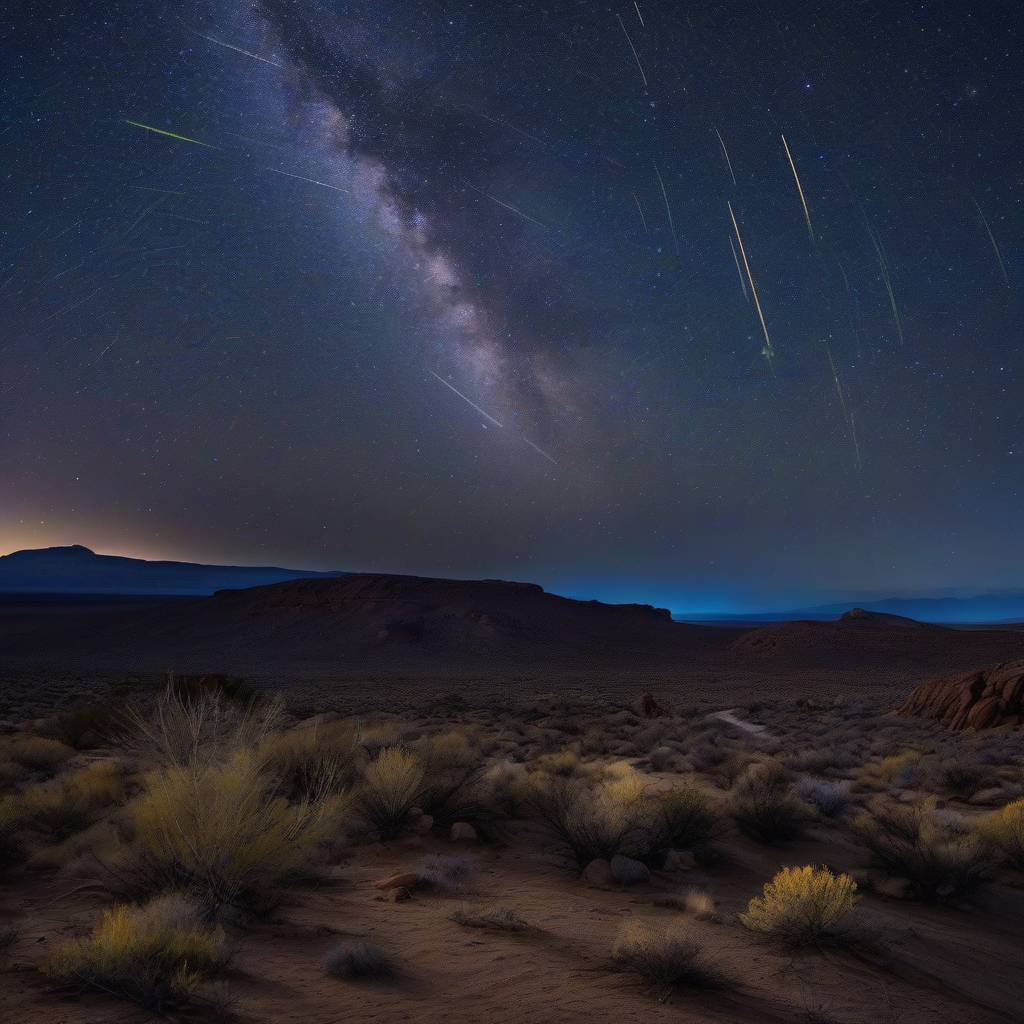
# Test Your Space Knowledge: Meteor Showers and ESO Headlines in This Week’s Quiz
The universe is a vast and thrilling expanse filled with wonders waiting to be explored. From dazzling meteor showers streaking across the night sky to groundbreaking discoveries from the European Southern Observatory (ESO), space exploration offers endless opportunities to marvel at the cosmos. But how much do you really know about these celestial events and discoveries?
This week, we’re putting your space knowledge to the test with an interactive quiz that covers everything from annual meteor showers to the latest headlines about distant exoplanets and galactic mysteries. But before you dive into the quiz, let’s explore a little more about these topics. Whether you’re a seasoned stargazer or just beginning your journey into the universe, this blog will help you sharpen your astronomical insights.
---
The Magic of Meteor Showers: Earth’s Cosmic Fireworks
Few phenomena captivate us like meteor showers. Watching these fiery streaks light up the night sky feels almost magical—but what exactly are meteor showers, and why do they happen?
What Are Meteor Showers?
Meteor showers occur when Earth, in its orbit around the Sun, passes through streams of debris left behind by comets or, less commonly, asteroids. These tiny particles—often no bigger than a grain of sand—burn up as they enter Earth's atmosphere at incredible speeds, creating bright streaks of light we call meteors.
One of the most fascinating aspects of meteor showers is their predictability. Each year, Earth’s orbit intersects these debris trails at specific times, giving rise to annual showers like the Perseids, Leonids, and Geminids. The Perseids, for instance, originate from the debris of Comet Swift-Tuttle, while the Leonids are tied to Comet Tempel-Tuttle.
How to Spot the Best Meteor Showers
If you’ve ever wanted to catch a meteor shower, timing is everything. Most meteor showers peak during specific nights when Earth is passing through the densest part of the debris stream. Here are a few tips for optimal viewing:
- Find a dark location: Light pollution from cities can obscure your view of meteors, so try heading to a rural area or a designated dark-sky park.
- Check the Moon phase: A bright Full Moon can wash out fainter meteors. The best viewing conditions are during a New Moon or crescent phase.
- Know where to look: Meteor showers are named after the constellation where their radiant (the point in the sky from which the meteors appear to originate) is located. For example, the Perseids’ radiant is in Perseus, and the Leonids’ is in Leo.
Some of the most anticipated meteor showers in 2023 included the Perseids in August, which boasted up to 100 meteors per hour, and the Geminids in December, known for their bright, multi-colored meteors.
---
ESO Headlines: Discoveries That Redefine Our Place in the Universe
While meteor showers remind us of Earth’s connection to ancient cosmic debris, the European Southern Observatory (ESO) is busy uncovering new secrets of the universe, from distant stars to mysterious black holes. The ESO operates some of the most advanced ground-based telescopes on Earth, including the Very Large Telescope (VLT) in Chile. These instruments enable scientists to peer deeper into space than ever before.
Exoplanet Discoveries: The Search for Other Worlds
One of the most exciting areas of research at the ESO is the search for exoplanets—planets orbiting stars outside our solar system. Using techniques like the radial velocity method and direct imaging, astronomers have discovered thousands of these distant worlds, some of which could potentially harbor life.
In 2022, the ESO made headlines with the discovery of Proxima d, a third planet in the Proxima Centauri system, just 4.2 light-years away. Proxima d is an Earth-sized planet located within the star's habitable zone, where conditions might allow liquid water to exist. Though its surface environment remains speculative, its discovery fuels hope of finding life beyond Earth.
Another groundbreaking ESO finding involved the detection of atmospheric water vapor on WASP-96b, a “hot Saturn” exoplanet located about 1,150 light-years away. By analyzing the planet’s atmosphere, scientists are piecing together how planetary systems form and evolve, bringing us closer to understanding the diversity of worlds in the universe.
Black Holes and Galactic Mysteries
The ESO also plays a pivotal role in unraveling the mysteries of black holes. In May 2022, the Event Horizon Telescope (EHT), a global collaboration involving ESO observatories, released the first-ever image of Sagittarius A*, the supermassive black hole at the center of our galaxy. This historic achievement provided direct visual evidence of the black